As an Amazon Associate, we earn from qualifying purchases. Some links on this site are affiliate links at no extra cost to you. Our recommendations are based on thorough research and editorial judgment.

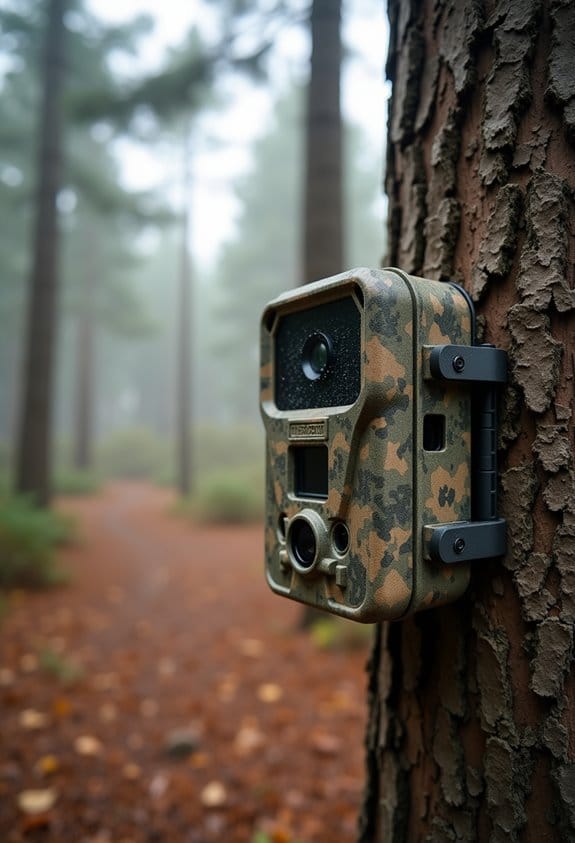
How Fog, Rain, and Snow Reduce IR Image Quality

Fog, rain, and snow seriously limit infrared (IR) image quality. Here’s how:
- Fog scatters infrared signals, reducing detection range by 50-70% and creating blurry visuals.
- Rain distorts images with glare from raindrops and absorbs infrared wavelengths, complicating identification.
- Snow scatters thermal radiation and often matches air temperature, making it hard to detect heat signatures.
You may be interested
These weather conditions mess with imaging clarity and can create extra challenges. Stick around to learn how to improve thermal imaging in tough weather!
Key Takeaways
- Fog can scatter infrared radiation, reducing detection range by 50-70% and causing grainy visuals that complicate image analysis.
- Rain scatters thermal radiation and creates glare, distorting images and potentially leading to false heat signature identification.
- Snow scatters infrared radiation due to ice crystals, often matching air temperature and reducing contrast needed for effective detection.
- Heavy rain and wet snow can absorb infrared wavelengths, significantly shortening detection range and impairing clarity.
- High humidity can lead to condensation on lenses, degrading image quality and resolution due to moisture in the air.
Overview of Weather Effects on Thermal Imaging
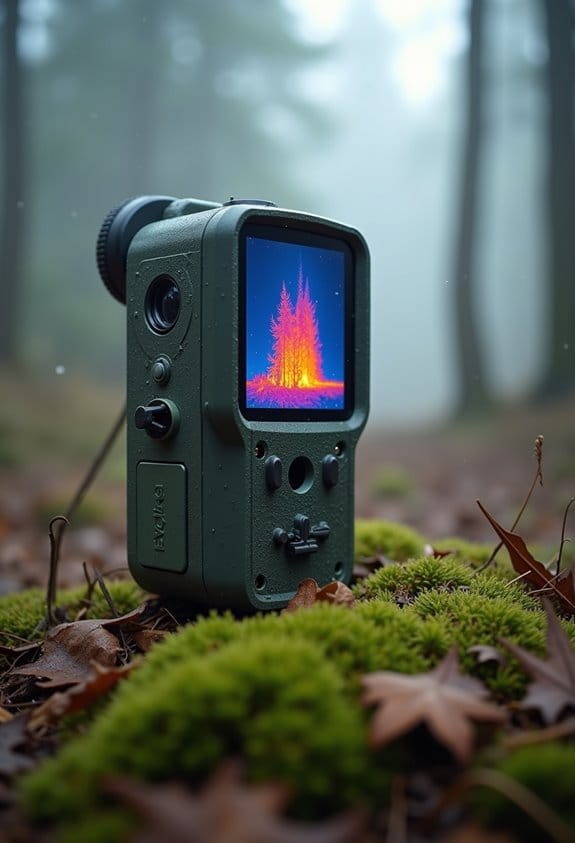
Have you ever thought about how weather can mess with thermal imaging? It’s pretty fascinating! Things like fog, rain, and snow can really change the quality of the images you get. For instance, when it’s foggy, those little water droplets can scatter infrared radiation, which might cut your detection range by a whopping 50 to 70 percent. That’s a huge impact!
Rain is another tricky factor. It not only creates glare but can also cause the lenses to fog up, making it tough to identify what you’re looking at. Imagine trying to spot something in the rain, and your lens is clouded over—definitely not ideal! And let’s not forget about snow; those ice crystals can distort images and lower resolution, especially when they start building up on your lens.
Humidity is something to watch out for, too. High levels can lead to condensation forming on your lenses, which affects clarity and your ability to see distant objects. So, if you’re planning to use thermal imaging, it’s smart to check the weather first. These natural conditions can really throw a wrench in things, so being prepared makes all the difference!
Choosing cameras with enhanced night vision features can help mitigate some weather-related visibility issues for clearer thermal images in challenging conditions.
How Fog Disrupts Thermal Imaging Performance
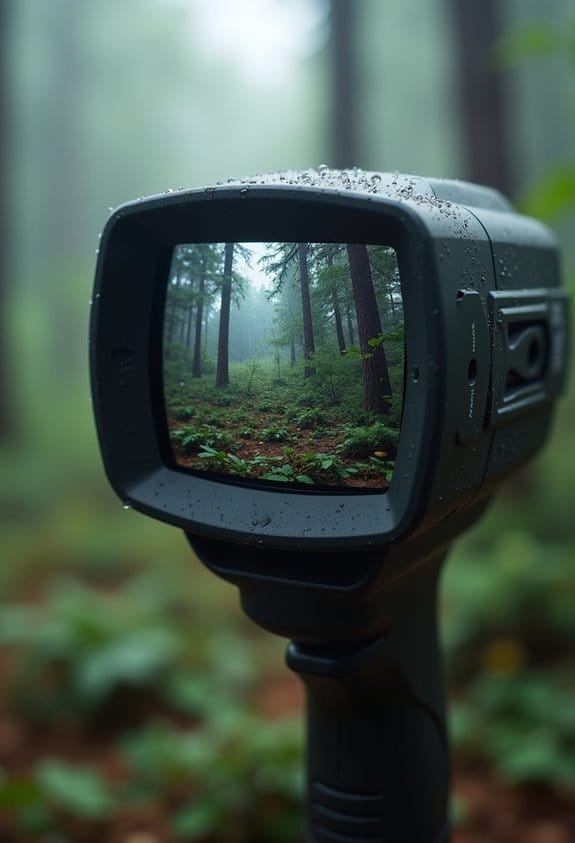
Hey there! Let’s chat about how fog messes with thermal imaging performance. You know, when you’re trying to see something through the haze, thermal cameras can struggle. That’s because fog is made up of tiny water droplets, and these droplets scatter infrared radiation, which can really mess with the clarity of the images we’re trying to capture.
Think about it: when the fog gets thick, your detection range can drop by a staggering 50-70%. So, if you’re trying to spot something out there, it can become almost impossible. For instance, if you usually can detect a person 1,000 meters away, dense fog might cut that visibility to just 300 meters or less!
Another tricky aspect is thermal contrast. When the temperature of the fog is nearly the same as the surrounding air, it confuses the thermal camera. This makes it hard to distinguish objects because everything appears more or less the same temperature. Plus, heavy fog brings along a lot of noise, creating grainy visuals, which can be super frustrating. In fact, if the visibility dips below 300 meters, thermal imaging might not be much better than using your own eyes.
To optimize your observation in such conditions, consider devices with low-glow night vision capabilities to improve image clarity during poor visibility.
The Impact of Rain on Infrared Image Clarity
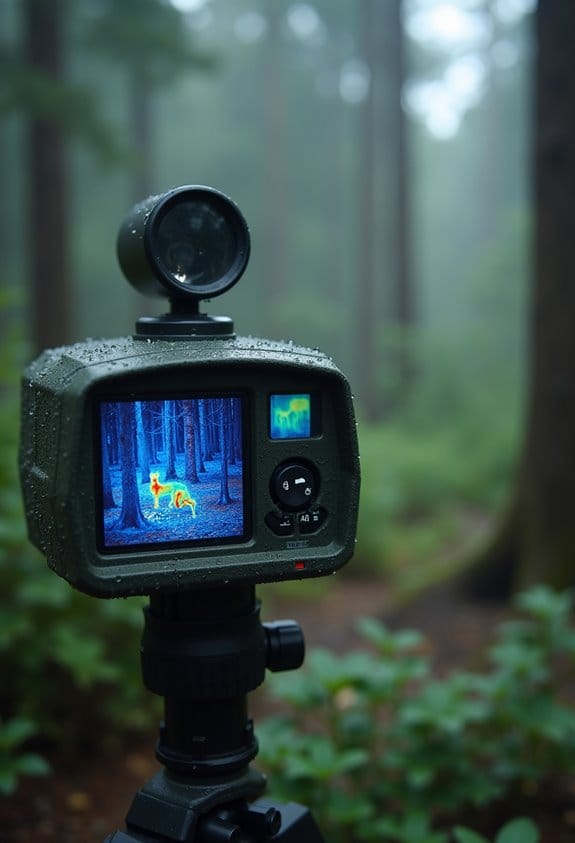
You know, rain can really mess with the clarity of infrared images—much like how fog can obscure your view. When it rains, tiny water droplets scatter thermal radiation, which makes it challenging to pick out different heat signatures. This scattering can really reduce the contrast in the infrared image, so what you see isn’t as clear or detailed.
There are a couple of things to keep in mind here. First, raindrops on the lens can distort the image and even create false heat signatures. Imagine trying to capture a warm object, but the raindrops lead you to believe it’s cooler than it actually is! Secondly, if it’s really pouring, the detection range takes a hit because those water droplets can absorb infrared wavelengths, making it tough to pick up distant objects.
Also, the size of the raindrops plays a role. Larger droplets can block more infrared signals than smaller ones, further obscuring the thermal imagery. Plus, if it’s humid out, that can make visuals even grainier due to excess moisture in the air. To improve image reliability in outdoor conditions, choosing cameras with IP66 durability rating ensures better protection against elements like rain and fog.
Recommended Products
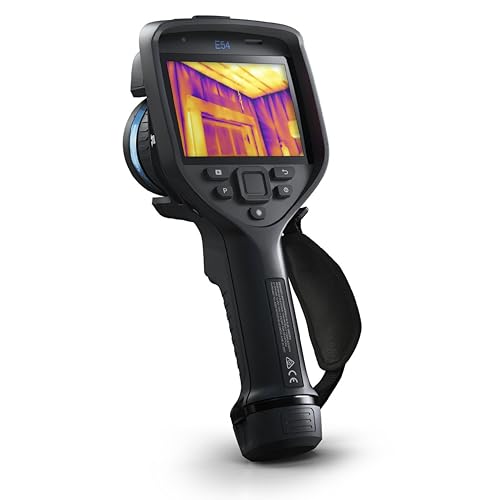
320 x 240 infrared pixel resolution with FLIR patented MSX visual enhancements

Model E8 Pro: Handheld IR camera measures temperatures from -20 to 550°C (-4 to 1022°F)

FLIR M232 Thermal IP Camera (320 x 240, 9Hz) with Pan, Tilt and electronic zoom
How Snow Messes With Thermal Imaging
Hey! So, you know how snow can really mess with thermal imaging? It’s fascinating how something we think of as just a fluffy blanket can affect our ability to get accurate readings. When snow piles up, it can really muddy the details in a thermal image.
First off, think about scattering. The ice crystals in the snow can toss around thermal infrared radiation, which can confuse those heat signatures we’re trying to read. Plus, if snow collects on the lens of a thermal camera, it can completely block the readings—talk about getting the wrong info!
Another thing to keep in mind is that snow often matches the temperature of the air around it. This reduces the contrast we need to spot warmer objects, making them harder to detect. Imagine looking for a warm animal in a snowy field—without that contrast, it’s like searching for a needle in a haystack!
Also, have you noticed how fresh snowfall can diffuse light? This can shorten our detection range, so we might miss warm objects that are further away. Speaking of warm objects, if you’re dealing with wet snow, it’s got a high emissivity—around 0.9. That means the thermal settings might need to be adjusted to get accurate readings. Proper camera maintenance like cleaning lenses can help maintain image clarity despite snow interference.
Understanding How Weather Scattering Impacts Detection
You know, when we talk about how weather impacts thermal imaging, scattering is a big player in the game. It can really mess with our ability to pick up heat signatures. For example, when there’s fog, those tiny water droplets float around and scatter infrared radiation. This can cut your clarity and detection range by about 50-70%! That’s a major hit.
Then you have rain. It creates this diffuse light, which makes everything look a bit blurry and distant objects harder to see. Imagine trying to spot someone a few hundred yards away during a downpour, it’s like squinting through a foggy window.
And let’s not forget snow. Those ice crystals can scatter light too, which distorts the thermal images you’re looking at. This makes it tricky to tell exactly where hot spots are. On top of that, atmospheric humidity is a factor. When there’s a lot of water vapor in the air, it can scatter thermal radiation, lowering your image quality and resolution. To maintain better performance in these challenging conditions, cameras with improved infrared technology and enhanced detection ranges are recommended.
How to Improve Thermal Imaging Under Adverse Conditions
When it comes to thermal imaging, weather can really throw a wrench into the works. But don’t worry, there are some straightforward ways we can improve our image quality, even when conditions aren’t ideal. For starters, using a high-resolution thermal camera is key; it makes a huge difference in clarity, especially when visibility is low. Imagine trying to spot a heat source in fog—having that extra detail can be like night and day.
Another handy tip is to adjust the emissivity settings on your camera. For instance, if you’re working with wet surfaces, bumping that setting to around 0.95 can really help with getting accurate readings. And don’t underestimate the impact of keeping the lenses clean; a hydrophobic coating can really help in the rain by preventing water droplets from distorting your images.
Moreover, integrating other technologies like radar or LiDAR can give an extra layer of reliability when you’re dealing with poor visibility. It’s like having a backup plan that works harmoniously with your thermal imaging setup. Plus, don’t forget the importance of regular maintenance—optimize your focus, and consider using an anti-fog coating. This will help ensure you’re getting the best possible infrared images. Additionally, selecting cameras with advanced IR night vision can greatly enhance image clarity under adverse weather conditions.
Frequently Asked Questions
Is Infrared Affected by Fog?
Yes, infrared’s greatly affected by fog. Its atmospheric interference, light absorption, and spectral response hinder thermal imaging, making fog detection methods essential for improving infrared applications. We should always consider these environmental factors in our assessments.
Does Fog Block Infrared?
Just like a blanket smothers warmth, fog blocks infrared visibility. Its moisture effects create optical properties that lead to atmospheric obstruction, revealing sensor limitations, especially in military applications during urban fog and challenging weather conditions.
Is Infrared Photography Possible in Fog and Mist?
Yes, infrared photography is possible in fog and mist, but we face visibility challenges. Utilizing infrared techniques, adjusting lighting, and applying post-processing solutions can improve image clarity despite atmospheric absorption and mist effects.
Can IR Goggles See Through Fog?
Can we truly rely on infrared goggles in foggy conditions? While they offer some infrared clarity, increased fog density can greatly reduce detection range, causing image distortion and hindering optical performance despite their night vision capabilities.