As an Amazon Associate, we earn from qualifying purchases. Some links on this site are affiliate links at no extra cost to you. Our recommendations are based on thorough research and editorial judgment.

Level vs Down-Angled: When to Tilt the Camera and Why

When choosing between level and down-angled shots, we need to evaluate their effects. Level shots keep vertical lines straight, making them ideal for architecture and landscapes. They provide stability and clarity. In contrast, down-angled shots can create drama and highlight foreground details. However, they may distort perception. Remember to maintain vertical alignment for easier post-processing. Each framing technique enhances storytelling differently. By exploring these methods, you’ll capture more compelling images. More techniques await!
Key Takeaways
- Use level shots for architecture and landscapes to maintain clarity and vertical alignment without distortion.
- Opt for down-angled shots in urban settings to create drama and emphasize foreground elements for storytelling.
- Remember that downward tilts can suggest powerlessness, while level shots provide stability and balance in composition.
- Prioritize level framing to simplify post-processing, improving image quality and reducing the need for distortion correction.
- Invest in high-resolution cameras to capture details effectively, allowing for cropping and minimizing quality loss during angle experimentation.
Core Differences Between Level and Down-Angled Shots Explained
You may be interested



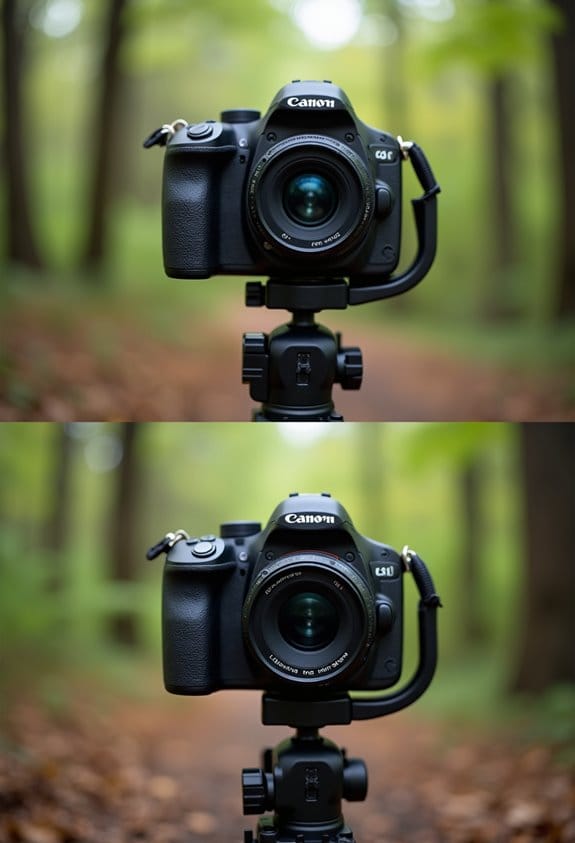
Hey there! So, let’s chat about something super cool in photography—the difference between level and down-angled shots. The angle of your camera can totally transform the way your subject appears. Understanding these two types of shots can really enhance your photography game!
First up, when you take level shots, you’re keeping everything aligned and true to life. Imagine snapping a photo of a tall building; a level shot will keep those vertical lines straight, which is especially important in architectural photography. No one wants their beautiful skyscraper looking like it’s about to topple over, right?
On the other hand, down-angled shots can be pretty dramatic but come with a catch. In these shots, buildings may look like they’re leaning because of the converging verticals. This angle can draw attention to the foreground nicely, but it might exaggerate the lower parts of your subject in an awkward way. For example, if you’re photographing a model walking down a street, a down-angle can make her look larger than life, but be careful—it can also stretch her legs unnaturally!
When setting up cameras for wildlife or outdoor photography, considering the trigger speed is crucial, as it affects how quickly the camera can capture momentary action.
Recommended Products

SUPERIOR STABILITY - Crafted with high-quality carbon fiber and aluminum alloy, this tripod supports up to 30 lbs, ensuring your camera stays steady for crisp, clear shots even with heavier equipment.

ACHIEVE UNRIVALED PRECISION - Featuring self-locking gearing, the d4 Geared Tripod Head allows for meticulous adjustments, ideal for landscape, panorama, and macro photography.

New Rapid anti-leg-rotation technology
When to Use Level vs. Down-Angled Framing: Instances and Applications

When you’re out there snapping photos, figuring out whether to go with level or down-angled framing can really change the game. So let’s break it down simply.
Level framing is your go-to if you’re photographing architecture. It keeps those vertical lines perfectly straight, which is super important for showing off those building details. For example, if you’re capturing a stunning city skyline or an intricately designed façade, stick to level framing to maintain that clean look. It’s also perfect for landscape shots where you want everything to appear natural and realistic, kind of like how our eyes see the world. If you’re showcasing products, level framing helps each detail shine, making those images crisp and clear.
On the flip side, down-angled framing has its own charm, especially when you’re out exploring a city. It gives you a fresh perspective and can turn an ordinary shot into something special. Imagine photographing a colorful street art mural from a lower angle; it really brings out the vibrant foreground while making the background pop. This technique is fantastic for storytelling too, as it guides viewers’ eyes to what’s important in your composition.
In the end, it all boils down to what you’re trying to capture. If precision and clarity are your top priorities, go for that level framing. But if you’re feeling adventurous and want to create something unique, don’t hesitate to experiment with down-angled shots. It’s all about what works for your vision! For outdoor photography especially, consider camera features like trigger speed to capture wildlife or fast-moving subjects clearly.
Recommended Products
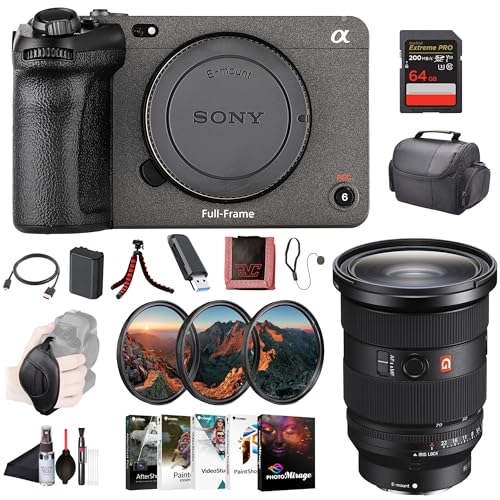
Sony USA Authorized. Bundle Includes: Sony FX3 Full-Frame Cinema Camera + Sony FE 24-70mm f/2.8 GM II Lens, 64GB Extreme PRO SDXC Memory Card, 3 Piece Filter Kit, Soft Bag, NP-FZ100 Battery, Memory Card Reader, Corel Photo Software, Flexible Tripod, Hand Strap, Memory Card Wallet, Cleaning Kit, HDMI Cable, Lens Cap Keeper

Product Type :Camera Lenses

SONY USA Authorized - Includes Full USA Warranty | Sony Alpha 7R V Full-frame Mirrorless Camera. Evolved imaging intelligence . Next-generation AI-based Real-time Recognition AF with human pose estimation deep learning combine with extraordinary 61MP picture quality, spectacular 8K24p/4K60p movies, and advanced connectivity and workflow to create a higher level of imaging performance. A7R V is an important turning point toward the future of imaging.
How Tilt Affects Viewer Perception and Scene Dynamics

Hey there! Let me tell you about how tilt can really change the way we see a scene and its vibe. When you tilt the camera down, you create something called perspective distortion. It’s pretty interesting because objects can look either way too small or way too large compared to what they actually are. This can truly change how we feel about what we’re watching.
For instance, when you use a down-angled view, it can make subjects, like a person or an object, seem less important or even subordinate. Think of those cinematic shots where the hero looks up at a massive villain—suddenly, that villain feels way more powerful! On the flip side, if you keep the camera level, you’re showing everything as it really is. This level shot kind of keeps things stable and objective, making us feel grounded in the scene. Additionally, using cameras with advanced motion detection technology can help capture these dynamic angles effectively while minimizing false alerts.
Recommended Products

Ultra High Definition 4K (3840x2160)FOUR TIMES the resolution of 1080P! 32 Channel 6K 12MP NVR with (32) H.265+ 4K (8MP) @20FPS Weatherproof 2.8mm Wide Angle Microphone Audio & Video PoE IP Bullet Cameras

Ultra High Definition 6K 12MP (4512x2512) SIX TIMES the resolution of 1080P! 12MP Real-Time Commercial-Grade 32 Channel NVR Security Camera System with (8) Bullet & (8) Dome H.265+ 12MP Weatherproof Wide Angle PoE IP Cameras (Support Two Way Audio)

STUNNING VIDEO QUALITY – The Canon CR-N300 PTZ camera delivers advanced performance and outstanding 4K 30p and Full HD 60p video output thanks to a 1/2.3" CMOS sensor, DIGIC DV 6 image processor, and Hybrid AF for fast, reliable, and precise auto focus.Operating Environment - Temperature : 0°C – +40°C (+32°F – +104°F), Humidity : 10% – 90% (without condensation).
How to Pick the Best Framing Technique for Your Shot
So, have you ever wondered how to pick the best framing technique for your shot? It’s actually pretty straightforward when you break it down! First, think about your subject. If you’re photographing architecture, you’ll want to keep that camera level to make sure all your lines and shapes look sharp and true. On the other hand, if you’re telling a story, try a down-angled shot. That can create a dramatic effect that draws people in. Imagine an intense scene where the character’s struggle is amplified by the angle.
Next, consider how your scene is laid out. If you’re going for a more polished, professional look, stick with level framing techniques. But if you’re aiming for something emotional or full of action, that down-angled frame could add some serious punch.
Finally, think about what you want your audience to feel. Do you want them to see every detail? Stick with level techniques for clarity. But if you’re in the mood for something a bit more artistic, don’t be afraid to tilt the camera a little. Finding what works best is all about experimenting and seeing how it influences your shot. And hey, once you get a feel for these techniques, you’ll be able to adapt and choose the perfect approach for each unique moment! Keep in mind that the choice of angle can also affect how image quality is perceived, especially when capturing details in varying light conditions.
Recommended Products

Full frame sensor - 47.3-Megapixel full-frame MOS sensor that provides a wide dynamic Range and excellent performance at high sensitivity (is 25600 Max sensitivity)

Pro-Level Photo and Video Performance: Made to support professionals, this professional camera features LUMIX’s renowned color science, controls inherited from the LUMIX S1RII and S1II, and industry-leading reliability across the entire workflow

Pro-Level Photo and Video Performance: Made to support professionals, this professional camera features LUMIX’s renowned color science, controls inherited from the LUMIX S1RII and S1II, and industry-leading reliability across the entire workflow
Tilt’s Impact on Viewer Perception
Have you ever noticed how tilting the camera can really change the way we see an image? This phenomenon, often referred to as tilt psychology, plays a huge role in shaping feelings and setting the mood for the viewer. It’s fascinating how a simple angle can tell a story or evoke certain emotions.
For example, take a shot where the camera looks down on a subject. That downward angle can make the person look smaller and might suggest they’re feeling overwhelmed or powerless. On the flip side, a level shot creates a balanced view, making everything feel stable and trustworthy—like a strong leader standing confidently.
Another neat trick is tilting the camera down a bit. This can draw attention to elements in the foreground, giving the image a richer sense of depth. Think about a photo where you’re capturing a child playing with toys on the floor; tilting down enhances that connection and brings those toys to life in the viewer’s eyes.
In outdoor photography and wildlife monitoring, adjusting tilt can also optimize infrared illumination range, improving night vision clarity and capturing better wildlife behavior.
Post-Processing Considerations for Level vs. Down-Angled Shots
When you’re processing your images, especially focusing on level versus down-angled shots, it’s good to keep a couple of things in mind. Level shots are typically easier to work with in post-production, while down-angled shots often demand a bit more attention due to potential distortion.
For instance, if you take a down-angled shot, you might notice that it requires distortion correction. This process can actually lower the image quality, sometimes cropping away up to 50% of the pixels! Imagine putting in all that effort to capture an amazing shot, only to lose half of it in editing. On the flip side, level shots keep your vertical lines true, meaning you won’t have to do as much correction. This often leads to clearer images with more detail. Using cameras with high-resolution options can also help preserve image quality even when some post-processing is needed.
Recommended Products

22 glass elements in 17 groups, with two Super ED Lens elements and two ED Lens elements.
22 glass elements in 17 groups, with six Super ED Lens elements and two ED Lens elements.

High Image Quality: Canon EOS R3 is small video camera that features a stacked, back-side illuminated 24.1-megapixel full-frame CMOS sensor for phenomenal low-light performance, image clarity and level of detail
Frequently Asked Questions
Can Down-Angled Shots Ever Be Sharper Than Level Shots?
Down-angled shots can sometimes be sharper than level shots, depending on the angle impact on depth of field and focus precision. Yet, careful composition is essential; choosing our moments wisely enhances overall sharpness comparison.
How Does Lighting Affect Level Versus Down-Angled Framing?
Lighting intensity impacts our choice between level and down-angled framing; strong shadows emphasize depth in down-angled shots, while even lighting suits level captures. We should consistently consider shadow effects to achieve the desired visual outcome.
What Equipment Is Essential for Achieving Level Shots?
To achieve level shots, we need a sturdy tripod for stability and a suitable lens that minimizes distortion. Combining these tools guarantees our images maintain accurate perspectives and professional quality, essential for our work.
How Do Cultural Perceptions Influence Preferred Framing Techniques?
Cultural differences shape our framing preferences, often reflecting local aesthetics and narrative styles. By understanding these influences, we can better align our visual storytelling to resonate authentically with diverse audiences across various cultural contexts.
Are There Specific Genres That Favor Level or Down-Angled Shots?
Certain genres definitely favor specific shots. In the suspense genre, level framing enhances tension, while action sequences often utilize down-angled shots to create drama and intensity, pulling viewers into the chaos of the moment.