As an Amazon Associate, we earn from qualifying purchases. Some links on this site are affiliate links at no extra cost to you. Our recommendations are based on thorough research and editorial judgment.

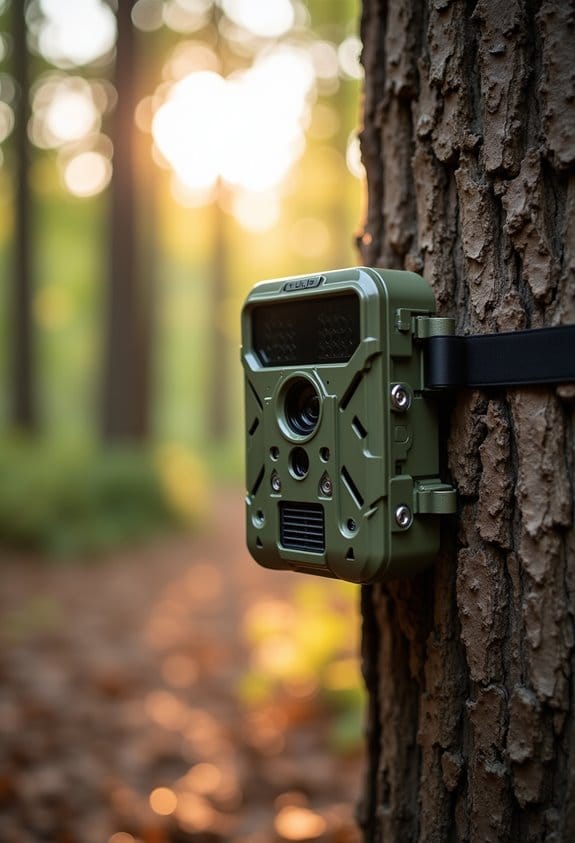
Night Range vs Image Detail: The Tradeoff Most People Miss

In night photography, balancing night range and image detail is essential for great shots. Night range refers to how well your camera works in low light. Image detail is about the clarity of your images. When we push ISO up for better night range, we risk introducing noise, which reduces detail. To avoid this tradeoff, consider these points:
- Use ISO between 200-800 for cityscapes.
- Opt for wider apertures for low light.
You may be interested
Next, we’ll explore specific techniques to maximize your results.
Key Takeaways
- Night range is essential for low-light photography, but higher ISO settings can compromise image detail by introducing noise and graininess.
- Maintaining a balance between ISO, aperture, and shutter speed is crucial to preserve clarity while capturing ambient light.
- Use mid-range ISO and aperture settings for urban scenes, adjusting as necessary to avoid detail loss in highlights or shadows.
- Long exposures capture subtle details but may require managing ISO to prevent noise from overwhelming the image quality.
- Post-processing tools can enhance image detail, but starting with the right settings in-camera is vital to minimize common issues.
Why Night Range and Image Detail Matter in Photography
When we think about photography, night range and image detail really stand out as important elements. Night range refers to how well your camera can perform in low-light situations. For instance, if you’re at a concert or capturing a romantic dinner under candlelight, having a camera with great night range means you can get those shots without flash, preserving the ambiance. But there’s a catch: if you crank up your ISO settings to brighten the image, you might end up with grainy photos that lose some of that sharpness you want.
Now, let’s talk about image detail. This is all about how clear and high-quality your photos look. A great example is when you take a close-up of a flower. If your ISO is too high, that lovely detail in the petals can get lost in noise. So, there’s a balancing act we have to perform with ISO, aperture, and shutter speed. Sometimes, using a lower ISO can give you those crisp images you’re after, but you’ll need to keep your camera steady for a longer time to avoid motion blur.
In situations like this, using a tripod or stabilizing your camera on a solid surface really helps capture that detail without sacrificing clarity. It’s all about finding that sweet spot between good light management and rich detail, especially in those darker settings. This understanding is essential as you progress with your photography journey! Moreover, cameras with high megapixels can greatly enhance image clarity and contribute to stunning photo quality even in challenging lighting conditions.
How to Get the Right Exposure for Night Shots
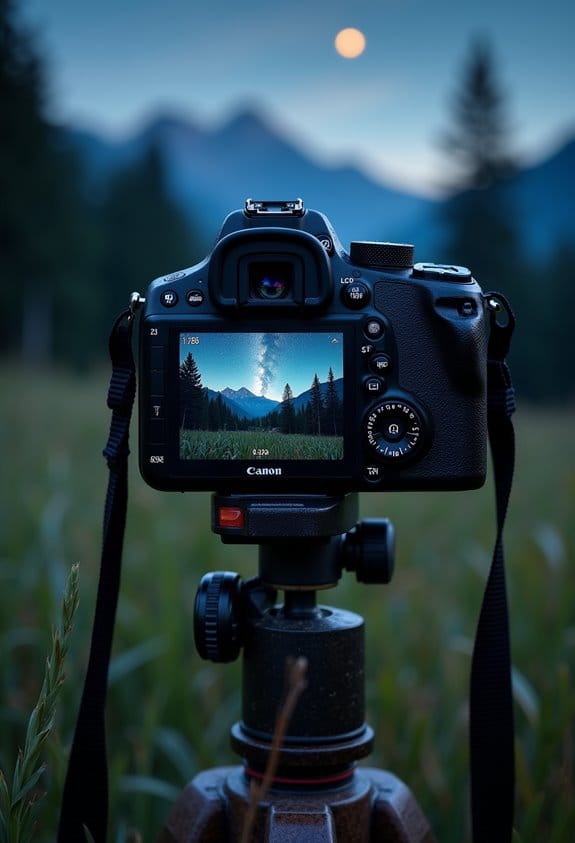
If you’re looking to capture some stunning night shots, nailing down the right exposure is key. Think of exposure as the balance of light that hits your camera sensor. To get started, let’s talk about ISO. For those vibrant urban scenes, you’ll want to keep your ISO settings between 200 and 800. But if you’re venturing into astrophotography—where you want to grab every twinkle of starlight—feel free to crank it up to around 3200 or even 6400. Just keep in mind, higher ISO can add some noise.
Next up is the aperture. For cityscapes, a mid-range aperture like f/5.6 to f/8 often works best. It ensures your city lights stay sharp and detailed. On the flip side, if you’re photographing the night sky, widen that aperture to f/2.8 or even faster. This way, you’re letting in more light, which is essential for capturing those dim stars.
When it comes to shutter speed, don’t forget to grab a tripod. Longer exposures are your friend at night. Aim for 15-20 seconds to let enough light in without making your shots a blurry mess. While shooting, keep an eye on your histogram—this handy tool helps you make sure you’re not losing detail in the dark areas.
Oh, and always shoot in RAW format! It gives you more flexibility when you’re editing your photos later, especially when it comes to reducing any pesky noise from high ISO. With these tips in your back pocket, you’re well on your way to capturing breathtaking night shots. So, ready to explore more techniques or gear that can take your night photography to the next level? Consider cameras equipped with advanced infrared night vision technology to enhance your low-light image clarity.
Balancing Long and Short Exposures in Night Photography
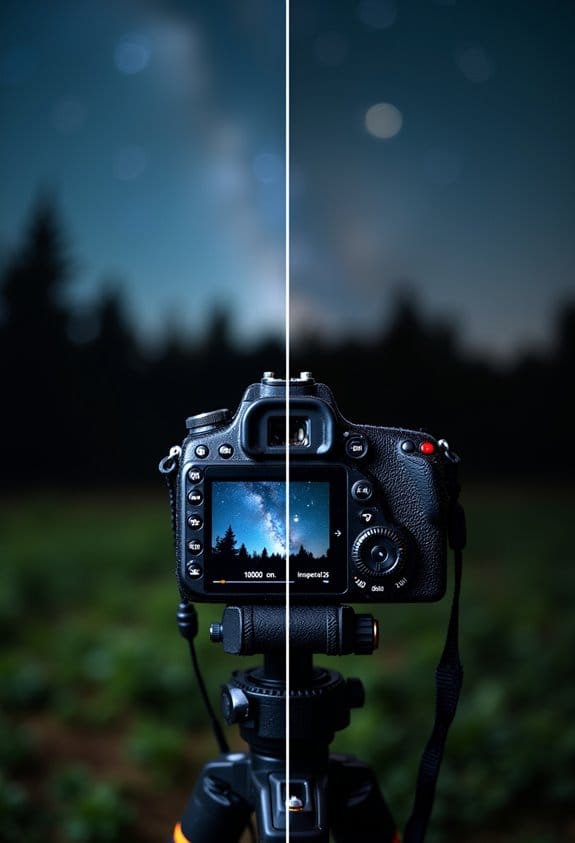
Balancing long and short exposures in night photography can be a bit of a puzzle, but it’s really about finding what works best for the scene you’re capturing. Think of long exposures, like 15 to 30 seconds, as your go-to for cityscapes. They do wonders in smoothening out lights and creating beautiful effects like light trails from passing cars. Just make sure to use a tripod; that way, your camera stays steady and avoids any blurry shots.
On the flip side, if you’re aiming to capture stars, you’ll want to stick to shorter exposures, usually up to around 20 seconds. This helps you avoid those star trails, letting you snap clear images of the night sky. When it comes to setting your camera, a good rule of thumb is to use an ISO setting of 200-800 for city lights when you’re using those longer shutter speeds. If you’re into astrophotography, crank it up to 3200-6400 for those quicker shots, which balances out light without introducing too much noise. To keep your camera secure outdoors during these shooting sessions, consider using mounts made from durable materials that protect against environmental elements and ensure longevity.
How ISO Affects Noise and Image Quality
When it comes to night photography, picking the right ISO setting is super important because it greatly influences noise and image quality. Think of ISO as your camera’s ability to pick up light in darker situations. Higher ISO settings can help you capture those low-light moments, but they can also introduce some unwanted digital noise—kind of like those random grainy spots you see in photos.
So, how does this noise show up? It tends to be more noticeable in the shadows and darker areas of your photos, especially when you crank up the ISO to really high levels. If you’re shooting at, say, ISO 6400, you might notice some color specks that weren’t there before. Plus, increasing the ISO can slightly decrease your dynamic range, meaning you might lose some details in those bright highlights or deep shadows.
If you want to get the best image quality, it’s usually better to expose your shots correctly at a higher ISO, like 3200, rather than trying to save light at a lower ISO, like 800, and risking underexposure. For example, if you’re snapping photos of a starry sky or city lights, aim for a higher ISO to preserve those details while still keeping the graininess in check. In the end, finding the right balance between ISO, exposure time, and aperture will help you minimize noise and keep your images looking sharp. And speaking of exposure, let’s chat about how to manage that next!
Strategies for Capturing Fine Details in Night Photography
Hey there! So, if you’re planning to take some nighttime photos, capturing those fine details can really make your shots pop. Trust me, a little know-how goes a long way when it comes to night photography.
First off, let’s talk about ISO. Keeping your ISO between 200 and 800 is a solid choice, especially for city scenes. It helps reduce that annoying noise that can sneak into your images and keeps everything looking sharp. You don’t want those grainy patches ruining your beautiful city lights!
Next, think about your aperture setting. If you’re shooting in an urban environment, try using an aperture between f/5.6 and f/8. This allows just the right amount of light while still keeping your images nice and sharp. But if you’re stepping outside to capture the stars, crank it up to f/2.8 to get as much light in as possible.
Don’t forget about your tripod! Long exposures are your friend at night. Aim for around 15 to 20 seconds to really pull in those subtle details without any motion blur. For instance, if you’re photographing a city skyline, those long exposures can beautifully render light trails from passing cars.
And here’s a pro tip: practice exposure bracketing. This means taking several shots at different exposures so you can balance bright highlights and dark shadows. It’s an easy way to enhance your image quality.
Additionally, using cameras with infrared night vision can greatly improve the clarity of nighttime images without disturbing the scene.
Give these techniques a try on your next night out with the camera! You’ll be amazed at the details you can capture. And who knows, you might find yourself drawn to the challenge of shooting in different environments, like the starry skies or the bustling streets, each requiring a little twist in your approach.
Avoiding Common Mistakes in Night Photography
Taking stunning night photos can feel thrilling, but trust me, it’s all too easy to stumble into some common pitfalls. Let’s talk about how you can avoid those mistakes together!
First off, be cautious with high ISO settings. While it might be tempting to crank it up for those low-light shots, this often results in grainy images. Instead, try lowering the ISO and opt for longer exposure times—think of it like giving your camera a chance to soak in the light. For example, instead of 3200 ISO, try using 800 ISO and just keep that shutter open a bit longer. You’ll see a significant difference in clarity!
Another vital tip is to keep a close eye on your histogram. This little graph is a lifesaver—it helps you gauge whether you’re losing detail in the highlights (like the glow of street lamps) or in the shadows (like the dark corners of a park). If you notice a spike on the left or right, you might need to adjust your settings.
And let’s talk about setting your camera to manual mode. While auto settings can be convenient, they often lead to missed opportunities, especially in tricky lighting. Manual adjustments give you the power to control the exposure based on your specific scene, whether it’s a twinkling cityscape or a serene night sky.
Also, think about shooting in RAW format instead of JPEG. RAW files retain much more data, which makes it easier to recover details and reduce noise during editing. It’s like giving yourself a safety net for those tricky moments when the lighting isn’t just right.
Finally, play around with different metering modes. Not every scene is going to react the same way to light, so switching between spot, center-weighted, and matrix metering can help you nail the exposure. For instance, if you’re capturing a bright moon against a dark sky, spot metering focuses on just the moon to avoid overexposing it.
Using camera equipment with night vision technologies can also greatly enhance your ability to capture clearer photos in low-light conditions.
Keep these tips in your back pocket, and you’ll see a real improvement in your night photography! Now that you’ve got the basics down, let’s explore how to make the most of your gear in those low-light situations.
Post-Processing Essentials for Night Photography
Post-processing is super important when it comes to night photography. The low light can really play tricks on your images, hiding details that you want to bring out. Here’s what you should focus on to make your night shots pop.
First off, let’s talk about adjusting highlights and shadows. This step is all about balancing the exposure in your pictures. By making bright areas even brighter, you’ll draw attention to your subject, while also revealing hidden details in the darker parts. For instance, if you’ve captured a city skyline at night, pushing those highlights up will make the lights sparkle, while adjusting shadows can bring out the buildings’ features.
Another key technique is reducing noise. Low light often leads to grainy images, but tools like Topaz Labs DeNoise or even Photoshop’s noise reduction feature can help smooth out those rough edges without losing the fine details. Imagine having a photo of a starry sky where the stars are clear and sharp instead of fuzzy blobs; that’s what noise reduction can do for you.
Make sure you’re shooting in RAW format, too. RAW files retain more data compared to JPEGs, which means you have way more flexibility when it comes to editing. You’ll appreciate this when you’re adjusting colors or lighting—having that extra data can save a shot that might otherwise feel too dark or flat.
And if you’re working with multiple images, consider batch processing. It can really speed things up and let you apply the same adjustments across several photos. For example, if you’ve got a series of nighttime street shots, you could tweak the exposure and contrast all at once, saving you tons of time.
Using cameras with 2K resolution can greatly enhance image detail at night, providing clearer and sharper photos straight from the source, which makes your post-processing work even more effective.
Practical Tips for Perfect Night Shots
Capturing stunning night shots can seem a bit daunting at first, but trust me, once you get the hang of it, you’ll be amazed at the photos you can take! Start by tweaking your ISO settings. For vibrant city scenes, an ISO range between 200 and 800 works best since it balances brightness and minimizes graininess. But if you’re venturing into astrophotography—think twinkling stars—the ISO should be cranked up to around 3200 to 6400 for those beautiful celestial captures.
Next up is your aperture. For clear cityscapes, go for an f-stop between f/5.6 and f/8. This lets in enough light while keeping everything sharp. If you’re shooting the stars, aim for f/2.8 or even faster to really bring those points of light into focus.
Shutter speed is another important factor; try using a tripod and setting your exposure to 15 or 20 seconds to prevent motion blur. It’s key to ensure that every detail comes through crisp and clear. Don’t forget to keep an eye on your histogram, which can help you avoid losing important highlights or shadows. If you’re unsure about exposure, bracketing can be super helpful—you can take multiple shots at different exposures and pick the best one later.
Oh, and always shoot in RAW format! This gives you more flexibility during post-processing, allowing you to enhance details and reduce noise efficiently.
With these tips in your back pocket, you’re well on your way to transforming those nighttime photos into stunning works of art. Next, let’s chat about some useful gear that can elevate your night photography even further! To capture sharp images in low light, remember that a camera’s trigger speed efficiency plays a crucial role in freezing motion and reducing blur during night shots.
Frequently Asked Questions
What Is the 20 60 20 Rule in Photography?
The 20 60 20 rule helps us balance composition techniques by dedicating space to foreground, subject, and background. It adapts well under various lighting conditions and aids in effective subject positioning for visual storytelling.
Is Higher ISO More Sensitive to Light?
Remember the feeling of stumbling through a dark room? Higher ISO does boost our camera’s light sensitivity, enhancing low light performance. Yet, we must embrace noise reduction techniques to keep our images clear and beautiful.
How Many Stops of Dynamic Range Is Good?
For us, a good dynamic range typically sits around 10 to 14 stops. This range’s importance shines in low light performance, allowing for better exposure management and detailed shadow and highlight retention—crucial for stunning photos.
What Camera Settings Are Best for Group Photos Outside?
For group photos outside, let’s set our ISO between 200–800, use f/5.6–f/8 for depth, and guarantee shutter speed’s at least 1/60 sec. Don’t forget outdoor lighting techniques and posing options suggestions for ideal results!