As an Amazon Associate, we earn from qualifying purchases. Some links on this site are affiliate links at no extra cost to you. Our recommendations are based on thorough research and editorial judgment.

Mounting Height by Species: Small Mammals vs Deer vs Predators

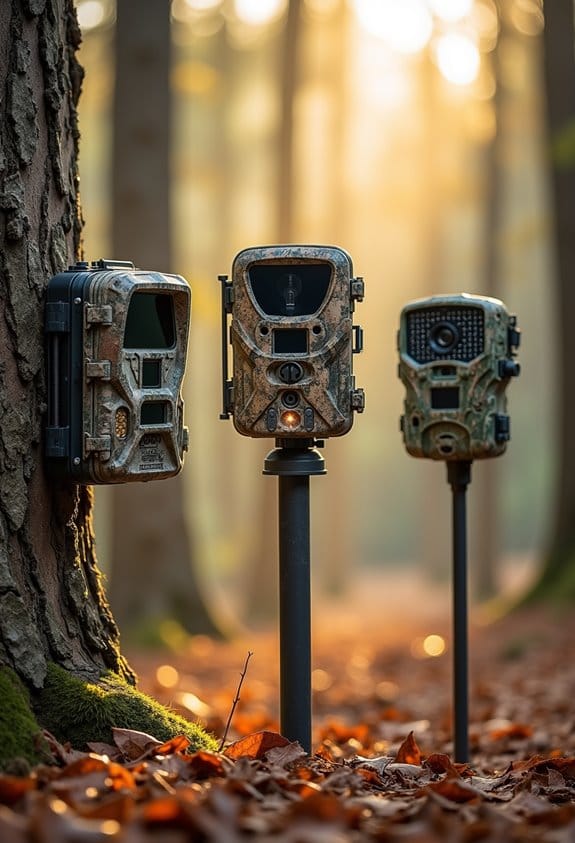
Camera trap height is key for observing wildlife effectively. For small mammals like rabbits, set cameras at 30-40 cm to match their movement. Deer do best at 70-100 cm, which captures their behaviors well. Predators vary; medium-sized ones like foxes are best monitored at 60-80 cm, while larger carnivores are better observed from 100 cm or higher. Adjusting height helps gather specific data on animal behaviors. Let’s explore more about how these factors shape our observations.
Key Takeaways
- Small mammals, like rabbits and skunks, are best monitored with cameras set at 30 to 40 cm for accurate data capture.
- Deer camera heights should range from 70 to 100 cm to effectively observe feeding and social behaviors.
- Medium predators, such as foxes, require cameras positioned between 60 and 80 cm to monitor their activities accurately.
- Larger carnivores perform best with cameras set at heights of 100 cm or more for effective monitoring of their behaviors.
- Adjusting camera heights based on species helps tailor observations and improve understanding of wildlife dynamics and interactions.
Understanding the Importance of Camera Trap Height for Ecological Research

You may be interested
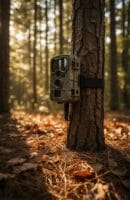

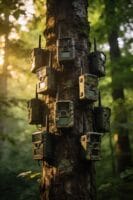
Hey there! So, have you ever thought about how important the height of camera traps is in ecological research? It’s pretty fascinating! The height at which we set these traps really shapes what we can capture in terms of wildlife activity. If we place them around 30 to 40 cm above the ground, it strikes a nice balance that helps us see a variety of critters—from tiny rodents to larger animals like deer.
When we set camera traps lower, we get a front-row seat to the antics of small mammals. Imagine seeing a squirrel darting across the forest floor or a rabbit nibbling on grass—setting traps low gives us great detail on their movements. On the flip side, when we get a bit higher up for things like deer, it ensures that we capture their behavior from a perspective that makes sense for their size. Plus, this height also grants us insight into predator-prey dynamics, letting us observe how different species interact with each other in a shared habitat. Choosing the right mounting screws, such as those with 360-degree rotatable interface, can help optimize camera positioning and improve data collection.
Why Camera Height Matters for Mammal Behavior
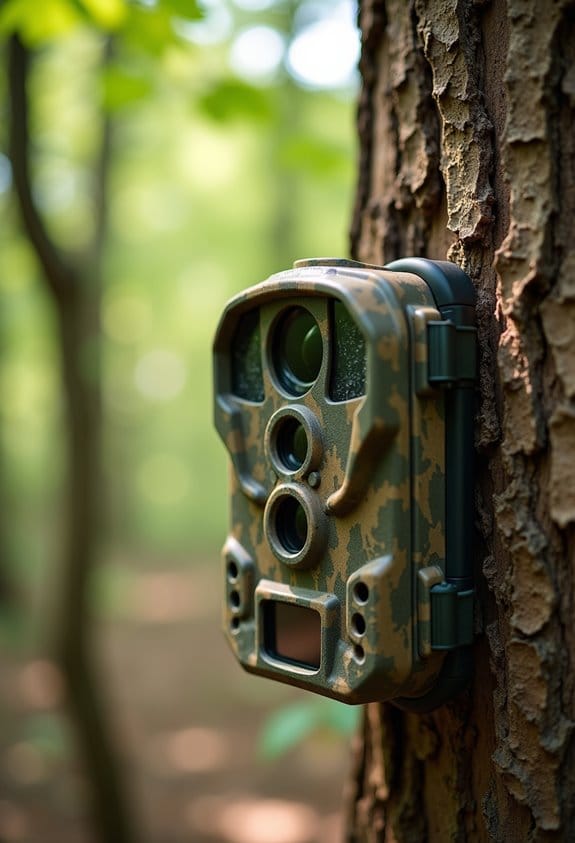
Hey there! So, let’s chat about why the height of camera traps is super important when we’re studying mammal behavior. You might not think about it, but where you place your camera can really change what you see.
For one, different heights can impact how well your camera captures all kinds of mammals. If you set a camera too high, you might miss smaller creatures like mice or rabbits that could easily go unnoticed. On the flip side, if the camera is too low, you might not pick up larger animals, like deer, as effectively. It’s all about finding that sweet spot! For example, if you position the camera at about 30 to 40 cm off the ground, you’re likely to catch those small mammals in action and learn more about their behaviors, like how they react to certain threats.
Plus, the right height helps keep our presence from messing with animal behavior. When animals don’t sense humans lurking around, they tend to act more naturally. That means you get better insights into their interactions and habits, helping us understand the entire ecosystem better. So, the next time you’re setting up a camera, remember that height truly matters! This insight can give you a clearer picture of the wildlife around you. To ensure your observation is reliable, consider using mounts with 360-degree swivel so you can easily adjust the camera angle to best capture the target species.
How Camera Trap Height Affects Small Mammal Detection
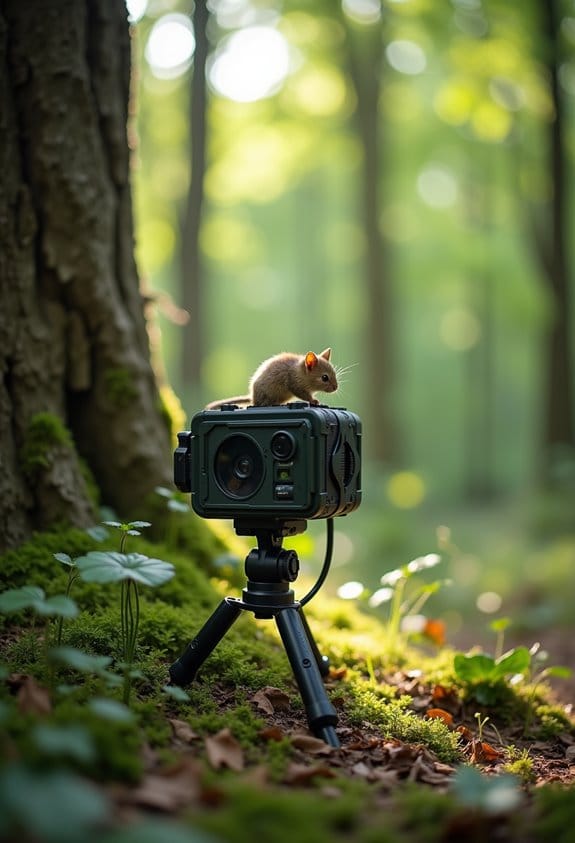
Hey there! If you’re looking to spot small mammals with camera traps, getting the height just right is super important. Ideally, you want to place those cameras about 30 to 40 cm off the ground. This height really matches where these little critters usually hang out since they tend to scuttle close to the earth.
Here are a few handy tips to think about! First off, keep your camera low to the ground; that’s your best shot at capturing these small mammals in action. For instance, if you’re setting up in a grassy area, setting the camera at that 30 to 40 cm mark can increase your chances of getting quality footage significantly. Also, try recording 20-second videos—it’s a great way to catch quick movers who might dart in and out of frame.
Understanding small mammals’ behavior is another key to success. Since they prefer to stay low, adjusting your camera height helps you tune into their natural patterns. When you get the hang of this, you’ll not only improve your detection rates but also gain valuable insights into their habits. Additionally, mounting near animal trails or common pathways can greatly enhance the likelihood of capturing their movements.
The Best Camera Heights for Tracking Deer
If you’re looking to effectively track deer with camera traps, getting the camera height just right is super important. Ideally, you want to set your camera between 30 and 40 cm above the ground. This specific range helps you capture those fascinating deer behaviors without getting too many interruptions from smaller animals, like rabbits or squirrels.
Think about it this way: when cameras are placed at that height, they can record crucial moments in a deer’s daily life, such as their feeding habits or how they interact with each other. For instance, you might get a great 20-second clip of a couple of deer sparring during mating season. That footage provides valuable insights into their social dynamics and behaviors.
Plus, understanding these patterns can shed light on broader ecological concepts, like how deer interact with their predators. So, by setting up your camera at the right height, you’re not just capturing cute animal videos; you’re also contributing to a larger understanding of the ecosystem. Isn’t it amazing how something as simple as camera positioning can play a role in wildlife research?
For the best results, consider using cameras with efficient solar panels to ensure continuous operation during your monitoring period.
Optimizing Camera Heights for Predator Detection
When it comes to detecting predators, optimizing camera heights is super important. From our experience, setting camera traps at about 30 to 40 cm works well for many species, but there’s so much more to consider. You see, larger predators might not be captured in this range, which means we could miss out on some crucial insights about their behaviors.
One great tip is to adjust your camera height depending on the size of the predator you’re studying. For example, if you’re focusing on something like a coyote, keeping the camera low might give you better shots of their movements. But if you’re after footage of a bear, you’ll probably want to elevate the camera a bit more.
Also, don’t forget about the environment. Different habitats can affect how and where predators travel. Think about placing your cameras near water sources or trails that have been frequently used. Understanding these dynamics can help you capture some amazing interactions in the wild. Moving forward, let’s talk about how different behaviors of predators can further influence our camera placement strategies.
Additionally, using trail cameras with rapid trigger speeds ensures you won’t miss fast-moving predator activity even at varied mounting heights.
Strategies for Positioning Cameras: Different Species, Different Needs
When you’re setting up camera traps, it’s crucial to understand that different species have different needs. Each animal behaves in its own way and has unique preferences based on its environment. For instance, if you’re trying to capture images of small mammals like rabbits or weasels, you’ll want to position your camera about 30 to 40 cm off the ground. They are often cautious and feel safer with lower camera placements that are less likely to alert them.
On the other hand, when you’re aiming for larger animals, like deer or predators such as wolves, you can raise your cameras higher. These animals are used to navigating through taller vegetation, so a height of around 1.5 meters works well for them. Additionally, to get a good gauge of how these species interact in their habitat, place the cameras about 100 meters apart. This spacing helps ensure that you’re capturing more accurate behavioral data without overlap.
As technology improves, we’re learning more about how changes in habitats affect various species. By adapting our camera setups, we not only gather better data but also gain fascinating insights into wildlife behavior. It’s all about understanding their world so we can respect and protect it better. Speaking of which, let’s talk about how to interpret the fascinating patterns we see in the footage! Using cameras with infrared night vision can significantly enhance nighttime monitoring without disturbing the animals.
Recommended Products
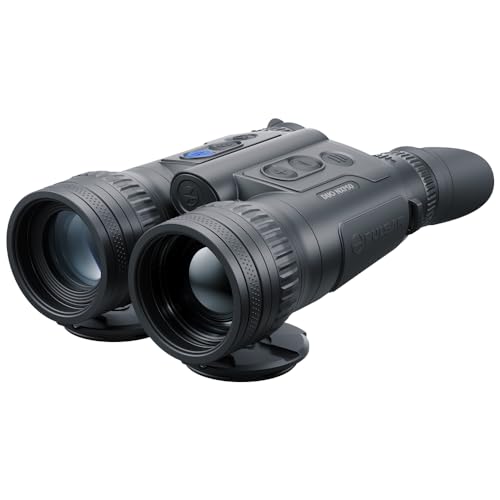
Innovative multispectral capabilities: Merger Duo NXP50 combines thermal and digital night vision imaging, offering enhanced detection, recognition, and identification capabilities.

Ideal for the Night: The Browning Trail Cameras Dark Ops Pro DCL Nano feature a high-performance Invisible Infrared Illumination System to increase picture quality and range at night like never before

Factors Influencing Camera Height Choices
Hey there! You know, when it comes to choosing the right camera height for wildlife monitoring, a few key factors can really change the game. For instance, consider the behavior of the animals you’re interested in. Smaller mammals, like rabbits or skunks, usually stick close to the ground, so you’ll want to keep the camera low to capture them effectively. On the flip side, if you’re aiming to catch a glimpse of larger animals like deer, raising the camera a bit higher works better since they tend to roam at a different level.
Another thing to think about is camera accessibility. You want to set up your cameras in spots that are easy to get to for checking and maintenance. Nobody wants to hike a mile uphill just to change the batteries! Lastly, the terrain can really dictate your choices too. In rough or rocky areas, you might find it tricky to mount the camera high, but in open fields, you could experiment with various heights for the best angles. Also, considering cameras with no-glow infrared LEDs can minimize disturbance to wildlife while capturing clear images.
How to Adjust Camera Heights for Specific Research Objectives
Hey there! Did you know that adjusting camera heights can really influence your research objectives, especially when it comes to observing wildlife? Getting these heights just right can help you capture authentic behaviors in different species.
For instance, if you’re trying to catch small mammals like mice or squirrels, setting your camera at about 30 to 40 cm works wonders. This height aligns with their natural interactions, so you’ll get those cute moments you’re after. On the other hand, if you’re focused on deer, aim for a height between 70 and 100 cm. This way, you’ll get a clear view of their movements without being too intrusive.
Don’t forget about medium predators, like foxes! Positioning your camera at about 60 to 80 cm can really enhance your footage quality. And for those larger carnivores, placing your camera at around 100 cm or more can make all the difference in capturing their behavior effectively.
Using camera calibration techniques and trying out different placements can help you find the sweet spot for each species. Remember, each animal has its own way of moving around, so making these species-specific adjustments is vital for successful monitoring. It’s all about observing and adapting to the unique patterns of the wildlife you want to study next!
Additionally, ensuring you use mounts with adjustable height options ranging from 9 to 49 inches can facilitate precise placement for different species.
Recommended Products

INCREASED MAGNIFICATION - Delivers 30x to 35x magnification when paired with Swarovski ATX/STX spotting scopes, enhancing viewing capabilities for detailed observations at varying distances.
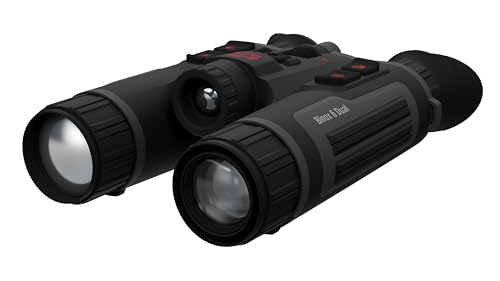
MAXIMUM DETAIL IN EVERY SPECTRUM — 4K Day, IR Night, Twilight, and elite 640×512 thermal imaging give you unmatched clarity for long range detection and identification.

640×512 20mK Thermal Sensor: Premium 12μm VOx detector delivers exceptional image clarity, superior thermal sensitivity, and outstanding long-range target recognition.
Case Studies: Successful Camera Height Strategies in Ecological Research
You know, the height at which we place camera traps can really change the game in ecological research. For example, when we set our cameras about 30 to 40 cm off the ground, we noticed a huge improvement in capturing images of small mammals without scaring them off. It’s all about finding that sweet spot.
We approached this by strategically placing our camera stations 100 meters apart, which allowed us to gather independent observations at 64 different sites. This setup helped us photograph various species, like red deer and red foxes, and gave us unique insights into how they interact with one another in their habitat.
Adjusting the camera height isn’t the only trick; using bait like sardines also played a key role in attracting the mammals we wanted to study. By combining these methods, we collected valuable data on their behaviors and how they use the landscape around them. It’s fascinating how much we can learn about wildlife just by tweaking our approach a little! Using cameras with infrared capture helped us obtain clear images day and night without disturbing the animals.
Future Directions in Camera Trap Research on Mammal Behavior
Hey! You know, when we talk about camera trap research on mammal behavior, it’s really fascinating how just tweaking our methods can reveal so much more about these animals. For instance, innovations in camera traps can help us better understand how different mammals interact with their environment and each other.
One cool thing to keep in mind is the height at which we set these cameras. Different species have different needs—like smaller mammals, which tend to be captured better at lower heights. A perfect example is setting a camera just a foot off the ground for critters like rabbits or weasels. On the other hand, larger animals, like deer, are better recorded when the camera is mounted around 30 to 40 cm up.
It’s also important to consider how these height adjustments might influence detection rates and the behaviors of the animals. For example, if a camera is too high, a wary animal may simply choose to avoid the area, affecting the data we collect. Understanding these dynamics helps us grasp how animals react to potential threats in their surroundings. With all this in mind, there’s so much more waiting to be uncovered in our research! Additionally, choosing mounts made from impact-resistant materials ensures that cameras remain stable and functional in various outdoor conditions.
Frequently Asked Questions
How Does the Size of Prey Populations Affect the Number of Predators?
Prey population stability directly influences predator dynamics. When prey numbers are robust, predator populations thrive, helping maintain ecosystem balance. Conversely, declining prey leads to fewer predators, disrupting this delicate interplay essential for a healthy environment.
What Is the Largest Order of Animals?
The largest order of animals is Insecta. While exploring mammal diversity and animal classification, we uncover their evolutionary significance, emphasizing how insects maintain ecosystem balance, reinforcing their role as essential contributors amidst the animal kingdom.
What Are the Heights of Animals?
Animal heights vary greatly, with small mammals at 10-30 cm, deer reaching up to 120 cm, and predators around 50-60 cm. These heights influence habitat preferences, feeding behaviors, and seasonal migrations we observe in nature.
What Happens in an Ecosystem if One Population Like Deer Increases Dramatically Due to a Lack of Predators?
When deer overpopulation occurs due to a lack of predators, we see significant ecological balance disruption. This shifts predator-prey dynamics, ultimately harming smaller mammals and reducing biodiversity essential for maintaining healthy ecosystems.