As an Amazon Associate, we earn from qualifying purchases. Some links on this site are affiliate links at no extra cost to you. Our recommendations are based on thorough research and editorial judgment.

Solar Panels for Trail Cams: When They Help and When They Don’t

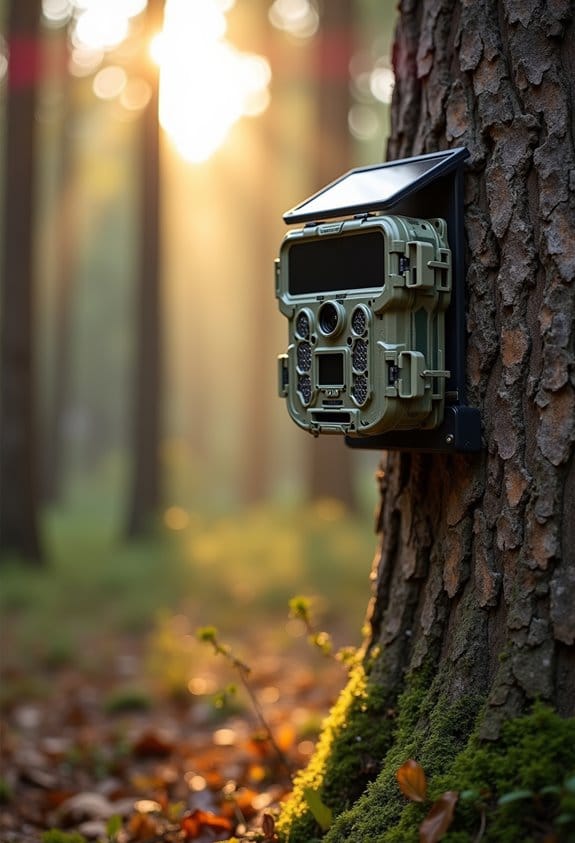
Solar panels can greatly enhance trail camera performance by supplying continuous power, which means fewer trips for battery replacement. They work best in sunny spots, capturing maximum sunlight. However, they struggle in shady areas or during cloudy weather. You’ll save money on batteries and reduce waste, but keep in mind, some cameras may need special adapters. If conditions aren’t right, you might need additional batteries. Let’s explore how to optimize your solar setup for better wildlife monitoring.
Key Takeaways
- Solar panels are beneficial in sunny areas, reducing battery replacement trips and providing continuous power supply to trail cameras.
- They function well in optimal conditions but falter in shaded locations, cloudy weather, or heavily wooded areas.
- Initial investments in solar panels lead to long-term savings, averaging $20 to $50 per season compared to traditional batteries.
- Maintenance includes regular positioning adjustments, cleaning panels, and monitoring battery health for reliable operation.
- Future advancements may improve efficiency and integration of solar technology, enhancing trail camera performance and user convenience.
How Solar Panels Enhance Trail Camera Performance
You may be interested


Have you ever thought about how solar panels can really amp up your trail camera experience? It’s pretty cool how they enhance performance and make things a lot easier for us. For starters, you’ll end up making fewer trips to replace batteries—only about two times a year instead of five. That alone saves you time and hassle!
One of the best features is that these solar panels provide a continuous power supply. They come with a built-in 5000mAh lithium battery that soaks up sunlight, making sure your camera stays powered up around the clock. Imagine being able to catch nighttime wildlife action without worrying about changing the batteries!
Another great perk is compatibility. Many of these solar panels work with different camera models that operate on 6V or 12V, so you can find one that fits your setup perfectly. Plus, consider the cost savings: you could save anywhere from $20 to $50 per season on batteries. That’s some serious cash back into your pocket.
And let’s not forget about the environmental aspect. By reducing battery changes, you minimize your footprint in those delicate wildlife habitats, ensuring less disturbance. So, if you set everything up right, you’ve got a steady power source that keeps your trail cameras ready to capture all the action without the stress. It’s also important to choose solar panels and cameras with power efficiency to maximize battery life and overall performance. Ready to learn more tips on maintaining your outdoor gear?
Recommended Products

10 Long Range IR Cameras L Series. This camera has a low glow IR flash, 100 ft. detection range and uses 4D batteries.

INCLUDES Two Tactacam Reveal Ultra Cellular Trail Cameras, and Microfiber Cleaning Cloth by Field Boys, a Trademarked Brand. The Tactacam Reveal Ultra is highly adaptable. It can be paired with optional accessories such as solar panels for extended battery life, and it is designed to work on multiple cellular networks, giving you flexibility in choosing your cellular provider.

1 L Home Model LC-H and can be powered by Verizon or AT&T. This unit connects all cameras in the system. The unit sends the pictures to the user via e-mail or the Cuddeback App.
Identify Ideal Conditions for Solar Panel Use
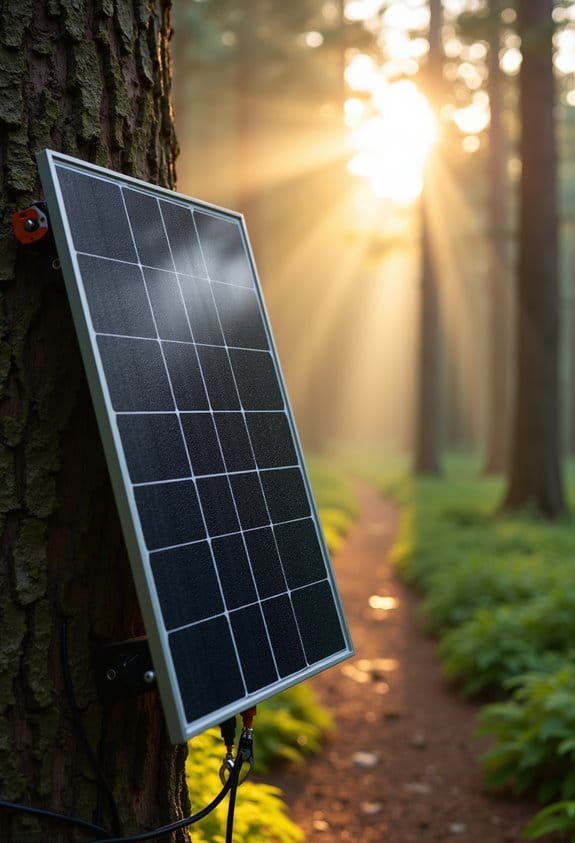
If you want your solar panels for trail cameras to really shine, you’ll want to consider the right conditions for setting them up. Think about placing them in sunny areas where they can soak up sunlight all day. The more sun they get, the more energy they can capture. For instance, if you live near an open field or a hilltop—places that aren’t shaded by trees—your panels will be in their happy zone.
Another tip is to think about the positioning. Aim for spots that get direct sunlight for most of the day. Maybe you can even do a quick walkthrough of your area at different times to see where the sun hits best. Also, using a built-in battery, like a 5000mAh lithium polymer, means your solar panels can keep the cameras powered up day and night. You won’t have to constantly swap out batteries, which is super convenient!
If you find yourself in an area that doesn’t see a lot of sun, consider adding a 12V lithium battery along with the solar panels. This combo makes sure you can still rely on your cameras even on cloudy days. Setting up your solar panels with these tips in mind maximizes their performance. Speaking of performance, another important factor is choosing a camera with IP-rated waterproof housing to ensure reliable operation under harsh weather conditions.
Recommended Products

The Construction Pack Tikee 4 comes in a dedicated hard case. It contains 1 Tikee 4 Timelapse camera, 1 Stainless Steel Arm, 1 Stainless Steel reinforcement plate, 1 Mounting Kit, 1 256GB MicroSD Card, 1 Cable Lock, 1 pair of lens caps

6K video*: 3 resolutions to choose from: Full HD, 4K and up to 6K for 7360×2650 panoramas, with an account on our myTikee timelapse app. Harness the power of your 6K images for unparalleled video editing freedom and get 6K video rendering
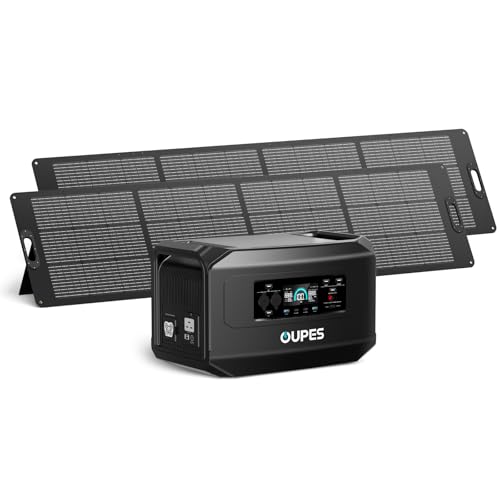
1000W BI-DIRECTIONAL ANDERSON DC PORT – Skip inverter loss with direct 12-80V/30A output. Delivers up to 1000W straight to RV fridges, portable air compressors, trolling motors, and auxiliary battery banks. Also serves as high-speed solar charging input. Perfect for overlanders & boondockers who need efficient, adapter-free DC power routing on the trail.
What Are the Limitations of Solar Panels for Trail Cameras?
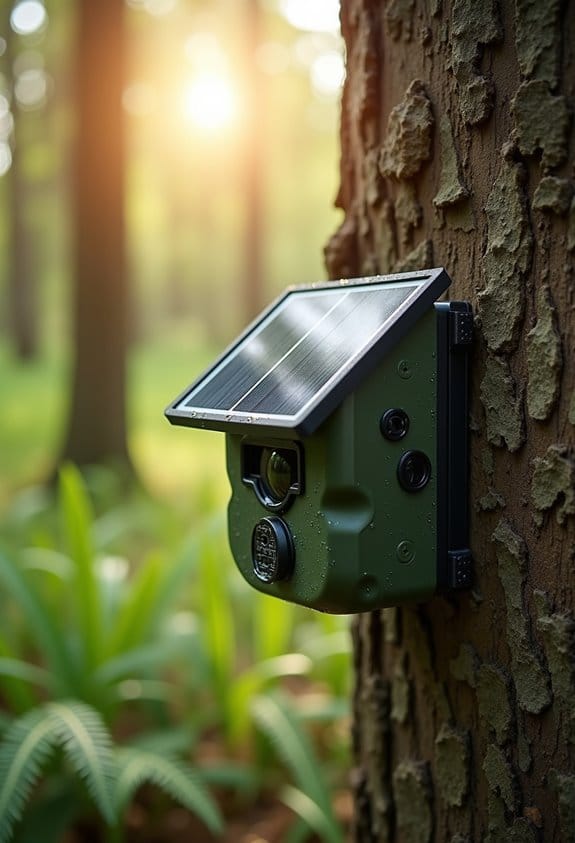
Alright, so let’s chat about using solar panels for trail cameras. They sound like a fantastic idea, right? But there are a few limitations you should know about before you set yours up. For starters, if your trail camera is in a shady area, like under thick tree cover, solar panels just won’t do their job effectively. In those cases, relying on external batteries might be your best bet for consistent power.
Another thing to consider is how much the weather can affect your solar setup. For instance, if you live in an area that gets a lot of cloudy days or rain, you might notice that the solar panels aren’t charging as well, which directly impacts your camera’s performance. It can be a bit of a hassle if you don’t check on things regularly.
Also, not every trail camera plays nice with solar power. Some models might need extra equipment or specific adapters to connect to solar panels, adding a layer of complexity to your setup. Plus, if you decide to use batteries alongside your solar panels, it can make the whole arrangement feel a bit unwieldy.
And let’s not forget about battery limitations. Even when adding extra amp-hour batteries, there could be times when the solar panels just can’t generate enough juice, particularly during stretches of low sunlight. For example, if you’re in a heavily wooded area or during the winter months, your camera might not get enough energy to stay functional.
It’s also worth noting that many cellular trail cameras come with integrated solar panels designed to optimize power efficiency, but compatibility varies by model.
Recommended Products

IN THE BOX: 1 x SiOnyx Aurora Pro Explorer Edition (SiОnух Aurora Pro Night Vision Camera, 940nm IR Illuminator, rechargeable batteries for both the camera and the IR Illuminator, 32GB microSD card + Reader and SD Card Box, USB charger and it's all packed neatly in a watertight hardshell case); 1 x Hat

Universal unlocked: Compatible with all major U.S. carriers, including Verizon, AT&T, T-Mobile and other prepaid carriers.
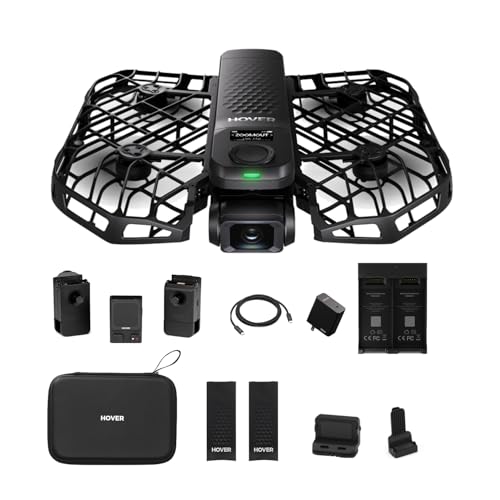
4K@60fps Cinematic Footage for Adventurers & Creators: Experience your adventures like never before with the HOVERAir X1 PRO action camera. Capture every detail in stunning 4K@60fps, from the crisp mountain air to the motion of the waves. This camera drone effortlessly delivers cinematic-quality footage, bringing your most unforgettable moments to life in ultra-clear, lifelike 4K. (Horizontal: 4K@60fps, Vertical: 2.7K@60fps)
Solar vs Traditional Batteries: A Comparison
Hey there! If you’re considering whether to go for solar panels or stick with traditional batteries for your trail cameras, let’s break it down a bit.
First up is cost efficiency. Traditional batteries can run you about $20 to $50 each season. It might not sound like much at first, but when you think about how often you have to replace them, that cost can add up pretty quickly. On the other hand, solar panels require a bigger investment upfront, but they can save you money in the long haul since you won’t be constantly replacing batteries.
Next, let’s talk about the energy source. Solar panels provide a steady flow of energy, so you don’t have to worry about running out of power after just a few weeks. Imagine scouting for wildlife and finding that your camera is dead because the batteries drained. With solar, that’s a thing of the past! In areas that get plenty of sunlight, solar panels really shine. But if you’re in a shady spot with fewer sun hours, you might want to consider using external 12V batteries, like Lifepo4. They can handle low light conditions much better.
Lastly, consider how this all impacts your visits to those wildlife areas. By using solar panels, you’ll visit less often to change out batteries, which means less disturbance for the animals. It’s a win-win situation! So, if you’re serious about keeping your cameras running without constant upkeep, going solar might just be the way to go. Choosing a solar-powered camera with a high-capacity battery (7800mAh to 13000mAh) can further enhance battery life and maintenance for remote use.
Recommended Products

4 Blackflash Cameras L Series. This camera has a completely invisible flash and uses 4D batteries.

8 Long Range IR Cameras L Series. This camera has a low glow IR flash, 100 ft. detection range and uses 4D batteries.

6 Long Range IR Cameras L Series Item LL-2A. Cuddelink infrared camera with low glow LEDs for long range and excellent image quality.
Maintenance Tips for Solar-Powered Trail Cameras
Setting up solar-powered trail cameras is just the start of your outdoor adventure! To keep them running smoothly, you’ll want to pay attention to a few maintenance tips. First off, check the solar panel’s position. It should be angled to catch the most sunlight possible, so don’t hesitate to adjust it if you notice it’s not getting enough light. For example, if there’s a tree casting a shadow, shifting it slightly could make a big difference.
Next, give the solar panel a quick clean every month or so. Dust, pollen, and other debris can block sunlight, so a simple wipe down can help it absorb energy better. While you’re at it, it’s a good idea to keep an eye on the battery’s health too. Most trail cameras have an app where you can see the battery voltage; if it’s running low, recharge or swap it out before your next adventure.
Another smart tip is to use weather-resistant cables. These will shield your equipment against rain and wear, ensuring that your cameras stay powered no matter what Mother Nature throws at you. Finally, don’t forget to perform a system test after setting everything up. It’s a quick check to make sure the solar panel and battery are in sync, saving you from surprises later on.
With a little regular care, your solar-powered trail cameras can remain efficient and reliable for all your wildlife watching! Speaking of which, a key factor to watch is the solar panel’s compatibility with your camera’s power supply options to maximize operational time. Speaking of which, let’s look at how to optimize your camera settings to capture the best moments.
Environmental Advantages of Using Solar Panels for Wildlife Monitoring
Using solar panels for wildlife monitoring is a fantastic way to make our lives easier while also being kinder to the planet. Imagine this: instead of frequently trekking into the wild to swap out batteries for trail cameras, the sun does the work for us! This means we can keep a close watch on animals without bothering them, which is especially important for sensitive species.
You might not realize it, but a single trail camera can chew through about 36 batteries in just a year. By switching to solar energy, we dramatically reduce this kind of waste. Not only does that keep our environment cleaner, but it also means we are embracing a sustainable energy source—no more worrying about what happens when those batteries are tossed out.
Plus, with solar panels, our cameras can run longer each day, giving us more insight into wildlife activity without interruption. For example, if you’re tracking a particular animal’s behavior, longer operation times mean you’re more likely to catch those important moments on film. Many cellular trail cameras with high capacity solar power can last up to three months on a single charge, minimizing maintenance trips.
User Experiences With Solar Panels for Trail Cameras
Hey there! Let’s chat about how solar panels for trail cameras are making life easier for wildlife enthusiasts. Picture this: using solar panels means folks like Randy Owens are cutting down their battery replacement trips from 2-5 times a year. Can you imagine? That’s a huge time saver!
Larry Shores, who juggles managing around 50 cameras, swears by the reduced maintenance that comes with solar setups. It’s like turning a chore into a much simpler task. Some users, like Schmidt, have even taken it up a notch by pairing solar panels with external batteries. This combo can really boost performance based on specific needs and environments.
Of course, not everything is a walk in the park. Some folks in the Trail Camera Junkies group have run into issues with bulky attachments that make installation a bit tricky. It’s a good reminder to think about your sunlight exposure and pick the right gear for your setup. Getting it right can make all the difference!
In addition, choosing trail cameras with built-in solar panels can enhance efficiency by providing reliable year-round power without frequent battery changes.
Future Trends in Solar Technology for Trail Cameras
Hey! Have you ever thought about how future solar technology might change the way we use trail cameras? It’s pretty cool to think about, isn’t it? Let’s break down some exciting trends we could see in the near future.
First off, solar panels are getting really efficient—this means they might charge faster and last longer. Imagine not having to check your camera’s battery as often, because the new solar tech keeps it powered up consistently. For example, the latest solar panels could recharge your camera twice as fast, even on cloudy days!
We’re also likely to see better batteries, like the Lifepo4 lithium ones. These newer batteries tend to last longer and perform better in various temperatures, so you won’t have to worry as much about them failing on you when you’re out in the wild.
Another neat development is smart power management. Some upcoming solar panels might track how much energy your camera uses and adjust accordingly. If you take a lot of pictures at once, the system could boost energy usage during that time, ensuring you never miss that perfect shot.
Plus, we could see lightweight, flexible solar panels that make it super easy to carry and install, even in remote locations. Think about being able to pack a solar panel that rolls up like a yoga mat—convenient, right?
Lastly, future trail cameras might even come with solar functions built right in, so you wouldn’t need separate panels at all! Just set up your camera, and it’s good to go without any extra fuss. It’s these little innovations that could significantly enhance your outdoor adventures. Keep an eye out for these changes; they could make capturing wildlife easier and more reliable than ever!
Additionally, integrating energy-efficient technology in future cameras will help conserve battery life while maintaining excellent performance.
Isn’t it fascinating to think about how technology can improve our interactions with nature? Now, let’s explore how these cameras might evolve in features beyond just solar power.
Designing Your Solar Power System for Optimal Use
When you’re looking to optimize your solar power system for trail cameras, there are a few key things to keep in mind. First off, sunlight exposure is crucial. You’ll want to find a spot where your solar panel can soak up plenty of sun throughout the day. Think about a south-facing location, maybe on a roof or a sturdy post in an open area—that way, your camera stays powered and ready to capture those moments.
Next, let’s talk about battery choice. A high-capacity 12V lithium battery is a solid option. It’ll make sure your camera keeps running smoothly, even in areas where the sun doesn’t shine as brightly. For instance, if you’re using your camera in a heavily wooded area where sunlight gets blocked, having that extra battery capacity really pays off.
Also, don’t forget to check your connectors and voltage. You want to ensure that the outputs of your solar panel match up with your system. Most setups are usually around 12V at 1 amp or 6V at 1.5 amps, so double-check to avoid any headaches down the road.
If your solar panel is above 5 watts, it’s a good idea to use a solar controller. This little device helps manage the power coming in and protects against over-voltage—keeping everything running smoothly and safely. Lastly, keep an eye on the battery capacity through your camera app. If you notice it dipping too low, you can make adjustments to your setup, ensuring your camera performs reliably.
Choosing a battery pack with solar panel compatibility and built-in safety features can greatly enhance your system’s efficiency and protect your gear from damage.
Optimizing your solar power system not only enhances your trail camera’s effectiveness but also saves you from the hassle of constantly changing batteries. Now let’s look at some practical methods for setting up your solar panel for maximum efficiency!
Recommended Products

[10X Faster than Regular Car Charger] - Charger 2 charges Elite 400 portable power station at a maximum 1000W input, full charge in 4.2h, 10X faster than traditional car chargers (<100W)."

This Package contains 4 Packs of Redodo 25.6V 100Ah LiFePO4 Lithium Battery.

High-quality Battery: The shell of marine battery 12v is made of ABS material, which is flame retardant, low and high temperature resistant,anti-vibration and shock resistance
Frequently Asked Questions
Do Solar Panels Work for Trail Cameras?
Solar panels can indeed work wonders for our trail cameras, much like a gardener nurturing plants. By enhancing battery efficiency, they allow us to capture more moments without frequent interruptions, bringing us closer to nature’s stories.
What Is the 33% Rule in Solar Panels?
The 33% rule in solar panels states they need at least one-third of their capacity in direct sunlight for best solar efficiency. This helps us guarantee our devices receive adequate power throughout the day.
Why Are People Getting Rid of Their Solar Panels?
People’re getting rid of solar panels due to panel efficiency issues, inadequate sunlight in some areas, compatibility problems with trail cameras, and durability concerns. Often, the effort and costs just don’t seem worth it compared to traditional batteries.
Why Are Trail Cameras Being Banned?
We recognize the appeal of trail cameras, yet they’re being banned due to ethical considerations around privacy violations and wildlife disruption. Stricter regulations aim to protect both people and animals from potential harm.